Government should work for voters, not insiders.
By any measure, California has blessings beyond that of any other place on Earth: weather, world-class institutions, global industries, renewable energy, natural beauty, and more.
And yet, we are nowhere near first-rate in terms of our outputs: housing affordability, transportation efficiency, infrastructure quality, perceptions of safety, and more.
Somewhere along the way, our potential is being squandered. California is a paradise. Making a life here shouldn't be this hard.
So, why is this happening?
Public service has become dominated by self-interested, out-of-touch career politicians.
Politicians depend on wealthy patrons and political bosses for their jobs. More than 90% of Congressional campaigns are typically decided before Election Day, thanks to gerrymandering,1 and 1 in 5 dollars spent on campaigns come from just 300 of the richest Americans.2
Once elected, these politicians spend their careers hopping from office to office, accumulating status and benefits that inoculate them from having to live in the real world. Increasingly, they maintain this privilege until well past retirement age, in some cases until death.
This lifestyle depends upon maintaining the favor of the people who draw the maps, write the big checks, and bestow the endorsements — i.e., not your everyday voter, the people who face high housing costs, unaffordable child care, job insecurity, or unsafe streets.
- New York Times, "How Redistricting Is Making the Midterms Less Competitive" (2026).
- New York Times, "The Scale of Billionaires’ Campaign Donations Is Overwhelming U.S. Politics" (2026).
Politics itself is out of balance, controlled by insiders while everything else is democratizing.
Political parties have not evolved in generations, freezing politics in a bygone era when we did not have the technology to involve everyone.
Party rules and decisions are still made by opaque committees, where membership is limited to insiders and financial supporters.
Party gatherings happen in VIP-only conventions, fundraisers, and other exclusive events. Even locally, party meetings typically are held on weekday evenings — hardly the best time for working parents or others with childcare responsibilities.
Parties are largely absent from our communities until the next election rolls around, at which time they spam us shamelessly. And between elections, everyday voters are never invited to weigh in on matters of substance, even though party leaders clearly have our phone numbers.
Our communities have been fractured, dividing us when we need to be most unified.
We no longer find our connections exclusively in the physical world. And while the internet has undoubtedly helped people who might otherwise feel alone find others with similar interests or challenges, it has also facilitated a disintegration of local attachments and affinity.
We socialize less. We have less contact with our neighbors. We attend fewer local events.
The digital spaces that have tried to fill this void are not on our side. They survive on engagement and ad sales, and like all other platforms that share that business model, they have found that peace, progress, and positivity are bad for the bottom line. They are content to let us snipe at each other, with real names or pseudonyms, as long as the stock price goes up.
This system is never going to reform itself. Everyone who could change it — the politicians, the party bosses, the billionaires — is getting too much in return. And nearly every fresh face who arrives promising reform either gets co-opted (because they want a career too) or chewed up (because they are vastly outnumbered by the first group).
There's only one way out: Us.
We are building the civic movement that California deserves.
We are rebalancing politics, away from insiders and towards people who live in the real world. We are reinventing public service, with duty and democracy, not careerism, at the core. And we are rebuilding community on a foundation of cooperation and neighborliness, not online isolation and toxicity.
Rebalancing politics, restoring public service, and rebuilding community.
Our members drive everything we do, from shaping policy priorities to selecting candidates to endorse to organizing neighborhoods. All of our services are built to change the relationship that members have with their government and with each other.
- ElectionsLive
Our political work, including our campaigns on behalf of candidates who pledge to serve — and step aside.
- IdeasLive
The member tool for proposing improvements in your community, building support, and getting them done.
- Stop Fundraising SpamLive
Our project to put an end to fundraising spam and hold the people who do it accountable.
- GatheringsSoonNeighborsSoon
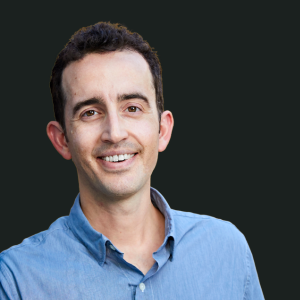
Andrew Allison
Founder & CEO
Andrew is an entrepreneur and democracy reform advocate. In 2009, Andrew founded Main Street Hub, a company that helped small businesses across the country grow and thrive. Main Street Hub appeared on the Inc. 500 list of America’s fastest growing companies and employed more than 700 people prior to being acquired in 2018.
In addition to his work building and leading companies, Andrew founded and led a successful campaign to make Austin, Texas, the largest city in the country to elect its mayors in high-turnout presidential elections and the second-largest city to adopt ranked-choice voting. Earlier in his career, he served on the speechwriting team for John Kerry’s presidential campaign and worked in the Democracy Program at the Brennan Center for Justice.
He holds a JD and an MBA from Stanford University and a BA in Philosophy from Yale University, and he lives in Santa Monica with his wife and their two daughters.
Us is for members.
Us is funded by (voluntary) member dues, but you can join for free. We will never sell your data, and you will not receive a single spam message from us.